


TL;DR
Kakadu’s three standout swimming holes are Jim Jim Falls, Twin Falls, and Maguk Gorge. All require a 4WD and are best visited in the dry season, roughly May to October. Jim Jim is the most iconic. Twin Falls rewards the logistics of getting there. Maguk is the quietest of the three. Read on for access details, what to bring, and safety notes.
Kakadu has dozens of waterholes, but not all are worth the drive. Pick the wrong one and you’re doing 60 kilometres of corrugated dirt road to find a pool that dried to a trickle. Pick the right one and you’re swimming in clear water under a sandstone escarpment with no one around.
The three Kakadu swimming holes covered here are worth the effort. Each one is different. Here’s what to expect.
Jim Jim Falls
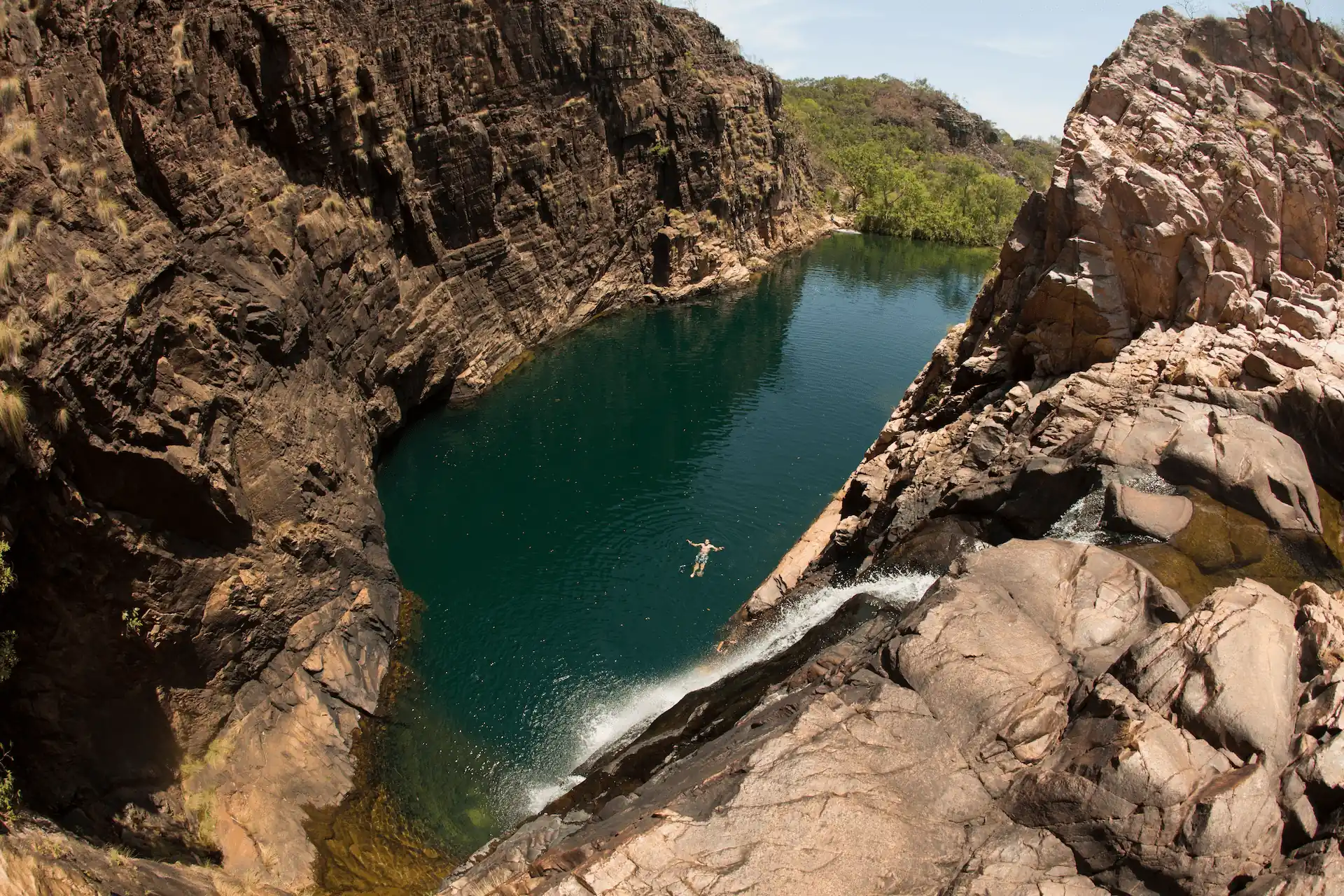
Jim Jim Falls is the most photographed swimming hole in Kakadu National Park. A 150-metre waterfall drops into a deep, aquamarine pool at the base of sheer sandstone cliffs. After the wet season, the flow is dramatic. By mid-dry season, the upper falls slow and eventually stop, but the pool stays swimmable and the setting is still worth the trip.
Getting there requires a 4WD. The turnoff is about 50 km south of Jabiru, then roughly 60 km of unsealed road that can include creek crossings. From the carpark, a 1 km boulder-hop track brings you to the water. The route isn’t technically difficult, but the rocks are uneven and slippery in patches.
- Bring closed-toe shoes (thongs won’t work on the boulder track), a hat, sunscreen, and more water than you think you need. The walk is exposed.
- Visit between May and September. The access road closes during the wet season, typically November to April.
The gorge walls along the boulder track are worth stopping to photograph. If you’re heading further south, Gunlom Falls is another option worth adding to the day.
Twin Falls
Twin Falls requires more effort than Jim Jim, but most people who’ve done both say it’s worth it. Two separate waterfalls feed into a long, emerald gorge, and the combination of calm pools, rock walls, and relative quiet makes it one of the best swimming spots in the Top End.
Access involves driving the same unsealed road past Jim Jim, then taking a short boat shuttle across the entrance to the gorge. The shuttle isn’t free and operates seasonally, so check availability before you go. From the landing, it’s a 20 to 30 minute walk to the falls over rock and sand.
- Bring cash for the boat shuttle, sturdy shoes, insect repellent, sunscreen, and food. There are no facilities at the falls.
- Visit between May and September. The boat shuttle runs during the dry season only.
Jim Jim and Twin Falls share the same access road. You can combine both in a single day, but it’s a long day. Start early.
Maguk Gorge
Maguk draws fewer visitors than Jim Jim or Twin Falls, which is part of what makes it worthwhile. A series of small cascades leads to a deep, clear pool framed by paperbark trees and sandstone walls. The gorge feels enclosed and sheltered in a way the other two don’t. It’s the better choice if you want space.
From the carpark (4WD access required), a 2 km return bushwalk through monsoon forest brings you to the swimming area. The track involves creek crossings and some rock scrambles. Sections can be slippery when wet.
- Bring sturdy walking shoes, water, sunscreen, and insect repellent. Parts of the track are sheltered but it’s warm throughout.
- Visit between May and September. The road to Maguk closes during the wet season.
Nearby: Gungurul (Alligator Hole) is close by and worth visiting if you’re in the area.
Safety at Kakadu’s Swimming Holes
All three swimming holes listed here are checked by Parks Australia rangers and considered safe when the designated signs are in place. Conditions change, particularly after rain. Always read the current signage at each site before getting in the water.
- Saltwater crocodiles can move between water sources after rain. Never swim where signage has been removed or looks outdated.
- Freshwater crocodiles are present in many of Kakadu’s waterways. They’re generally not aggressive unless provoked.
- The tracks to all three swimming holes involve uneven rock. Thongs are not suitable footwear.
- Water levels after the wet season can be deeper and faster moving than they appear.
- Carry plenty of water. Kakadu is hot year-round.
- Don’t swim alone.
Check Parks Australia’s website for current road and swimming conditions before you leave.
The Best Way to See Kakadu’s Swimming Holes
Jim Jim Falls, Twin Falls, and Maguk Gorge each offer a different experience. Jim Jim is iconic and worth visiting even when the upper falls aren’t running. Twin Falls rewards the effort. Maguk suits travellers who’d rather have fewer people around.
All three are best visited between May and September with a 4WD and an early start. If you’d prefer not to drive the unsealed roads yourself, a guided tour takes care of the access and adds context to what you’re seeing.
FAQ
What are the must-visit swimming holes in Kakadu?
Jim Jim Falls, Twin Falls, and Maguk Gorge are the three most popular. Jim Jim is the most accessible. Twin Falls requires a boat shuttle. Maguk involves a short bushwalk and draws fewer visitors than the other two.
Is it safe to swim in Kakadu?
Swimming at designated areas is considered safe when the crocodile-free signage is current and in place. Always read the signs at the site and check current conditions with the park before you visit. Don’t swim at unmarked locations.
Is a 4WD required to access Kakadu’s swimming holes?
Yes. Jim Jim Falls, Twin Falls, and Maguk Gorge all require a 4WD. The roads involve unsealed sections and creek crossings not suitable for two-wheel-drive vehicles.
When is the best time to visit Kakadu for swimming?
May to September, during the dry season. Most swimming hole access roads are closed during the wet season (roughly November to April), and water conditions vary significantly between seasons.
Are there crocodiles in Kakadu swimming holes?
Designated swimming areas are checked and cleared of saltwater crocodiles by rangers. Freshwater crocodiles may be present in some areas but are not typically dangerous unless provoked. Always check current signage at each site, as conditions can change.
Other Tips & Articles
Check out our other Kakadu Tours


