


Kakadu is one of the world’s most astounding national parks, sitting alongside the likes of Tierra del Fuego and Yellowstone as one of the world’s most surreal and inspiring natural wonderlands!

Two hundred metres of water thundering over ancient red cliffs into a deep green plunge pool. Jim Jim Falls is one of the most striking sights in all of Kakadu, and it earns every bit of the effort it takes to reach it.
Here’s the honest answer up front: no, you cannot reach Jim Jim Falls without a 4WD. The access road demands high clearance and solid suspension. Standard hire cars and 2WDs won’t cut it. If you’re travelling in a regular vehicle, a guided 4WD tour is your best option. And if you’re visiting in the wet season, the road is closed entirely, but there’s still a way to see the falls.
This page covers everything you need to know: why a 4WD is required, how to get there without one, when the falls are open, what the walk is actually like, and whether the whole thing is worth the effort.
(Spoiler: it is.)
Do You Need a 4WD to Get to Jim Jim Falls?
Yes, and there’s no getting around it. The Jim Jim Falls access track is a dedicated 4WD-only road. It’s rough and corrugated in places, crossing terrain that genuinely demands high clearance and solid suspension.
Travelling in a standard rental car or a 2WD? You’ll need to either hire a 4WD or join a guided tour. Attempting the track in an unsuitable vehicle is dangerous, and driving a 2WD on a 4WD-only road in a national park can also void your hire car insurance.
Coming from Darwin or Jabiru, a guided 4WD tour is the most straightforward way to do it. Your guide handles the driving and the logistics, and you get to focus on the scenery.
How to Get to Jim Jim Falls Without a 4WD
The most practical option is joining a guided 4WD tour. Your guide drives a purpose-built vehicle, knows the track conditions, and gets you there and back without the stress. Most tours depart from Darwin or pick up from Kakadu accommodation.
If you’re planning a longer trip through Kakadu, a multi-day tour that takes in Jim Jim Falls is well worth considering. You’ll cover more of the park, spread the driving across several days, and see a lot more than just the falls.
Tours that include Jim Jim Falls:
- 5 Day 4WD Kakadu and Litchfield Camping Adventure
- 4 Day Kakadu Outback Adventure
- 3 Day Kakadu Camping Tour
These tours are built for exactly this situation. You don’t need your own 4WD or any off-road experience. Just show up.
When Is Jim Jim Falls Open?
Jim Jim Falls is accessible by road in the dry season only, roughly May to October. During the wet season (November to April), flooding makes the access road completely impassable.
The exact open and close dates shift from year to year, depending on how quickly flood waters recede after the wet. The shoulder months of April and November can be unpredictable. Even during the dry season, Parks Australia may temporarily close the track if conditions deteriorate after rain.
Before you head out, always check current track conditions with Parks Australia or the NT Parks and Wildlife Commission. Don’t rely on last year’s dates.
Note for travellers: We’ve flagged this with the team to confirm the current season’s open dates. Check the Parks Australia website for the most up-to-date access status before you go.
What Can You See at Jim Jim Falls in the Wet Season?
Here’s the irony: the wet season is when Jim Jim Falls looks its most spectacular. The full force of the Top End monsoon drives a massive volume of water over that 200m cliff face. It’s a genuinely dramatic sight.
You just can’t drive there.
What you can do is book a scenic helicopter flight from the Jabiru area. Flights run during the wet season and give you an aerial view of the falls at peak flow. If you’re visiting Kakadu between November and April, this is absolutely worth looking into.
The Jim Jim Falls Plunge Pool Walk
Once you arrive at the carpark (dry season only), the walk to the base of the falls is around 2 km each way and takes roughly 20 to 30 minutes.
The track moves through monsoon forest and across a boulder field before opening up to the plunge pool. This isn’t a manicured walking trail. Expect some scrambling over rocks and uneven ground, and wear sturdy footwear.
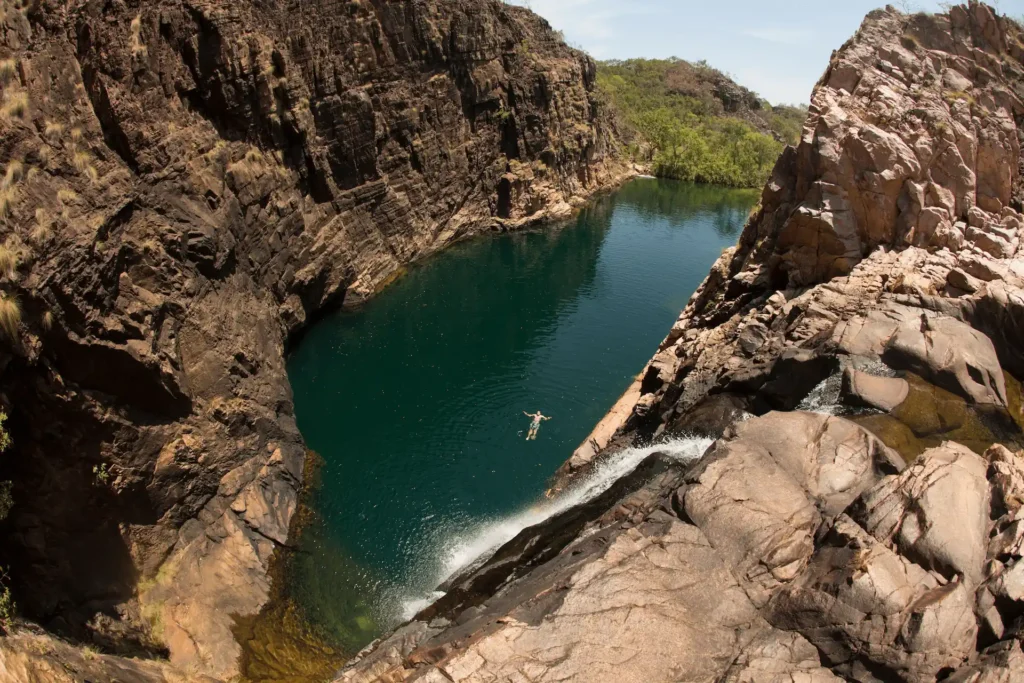
When you get to the pool, the view makes every step worthwhile. The water is dark and deep, and the cliff walls rise above you on three sides.
One important note: freshwater crocodiles are often present in the plunge pool. Do not swim unless signage at the site specifically says it is safe. Obey any closures in place when you visit.
Is Jim Jim Falls Worth It?
Yes. Genuinely, without hesitation.
At 200 metres, Jim Jim Falls stands taller than every waterfall at Litchfield National Park. The monsoon forest walk, the boulder scramble, and the sight of those cliffs rising above the plunge pool combine into something you won’t find anywhere else in the country.
For most visitors to Kakadu, Jim Jim Falls is the standout memory of the whole trip.
The 4WD requirement and dry-season-only access can feel like obstacles when you’re planning. Try thinking of them differently: they’re what keeps this place wild and relatively uncrowded. You won’t be sharing the plunge pool with a bus full of people.
Twin Falls: Worth Combining With Jim Jim
If you’re making the drive out to Jim Jim Falls, it’s worth including Twin Falls in your plans. The two landmarks sit in the same part of the park, so you can take in both in a single day.
Twin Falls is a split cascade that drops into a gorge below. Smaller than Jim Jim, but it has its own quiet drama. In the dry season, two walks are available: one to the gorge base and one above the falls. Check conditions before you go, as access can shift depending on water levels.
Ready to Go?
Jim Jim Falls is the kind of place that stays with you long after you’ve left. The logistics are real, but they’re solvable. If you don’t have a 4WD, a guided tour is the simplest way to get there without any of the hassle.
Browse Kakadu 4WD tours that include Jim Jim Falls. We’ll take care of the driving. You just take in the falls.
Frequently Asked Questions
Can you get to Jim Jim Falls without a 4WD?
No. The Jim Jim Falls access track is a 4WD-only road that requires high clearance and solid suspension. Standard hire cars and 2WDs cannot make the drive. Your options are to hire a suitable 4WD vehicle or join a guided 4WD tour.
When is Jim Jim Falls open?
Jim Jim Falls is accessible by road during the dry season, roughly May to October, though exact dates vary by year. The wet season (November to April) brings flooding that makes the road impassable. Always check current track conditions with Parks Australia before you travel.
How long is the walk to Jim Jim Falls?
The walk from the carpark to the plunge pool is approximately 2 km each way and takes around 20 to 30 minutes. The track crosses boulder fields and moves through monsoon forest, so wear sturdy footwear.
Can you swim at Jim Jim Falls?
Freshwater crocodiles are often present in the plunge pool at Jim Jim Falls. Do not swim unless signage at the site specifically indicates it is safe. Always follow any park closures in place when you visit.
Is Jim Jim Falls worth visiting?
Yes. At 200 metres, Jim Jim Falls is taller than every waterfall at Litchfield National Park. The walk through monsoon forest, the boulder scramble, and the sight of the falls rising above the plunge pool make it one of the most memorable experiences in all of Kakadu.
How do I get to Jim Jim Falls on a tour?
Guided 4WD tours to Jim Jim Falls depart from Darwin and from accommodation within Kakadu. Multi-day tours typically include Jim Jim Falls as part of a broader Kakadu itinerary.
What can you see at Jim Jim Falls in the wet season?
The road to Jim Jim Falls is closed during the wet season. That said, scenic helicopter flights operate from the Jabiru area and offer spectacular aerial views of the falls at full flow. The wet season is actually when the falls are at their most dramatic.
How far is Jim Jim Falls from Jabiru?
Approximately 102 km, with an estimated travel time of 1 hour 30 minutes.
Other Tips & Articles
Check out our other Kakadu Tours


